Tuesday, 10 August 2010

Spartacus, The Bolshoi Ballet 21/07/2010

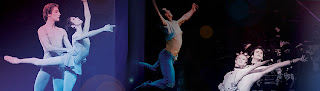
It would be pretty impressive for any one who regularly reads a newspaper to have missed the sensation that is the Bolshoi's young star Ivan Vasiliev (pictured), dancing the title role in this performance. Almost every newspaper has had a feature article, many full page, and several had interviews with the man himself. This is practically unheard of in ballet, so what's so special about this man?

I was expecting to see the second cast, and running late, didn't pick up a cast sheet before the first act. By the interval I was utterly bemused - how was it possible that the lauded Vasiliev could be better than the man dancing this evening! Of course it all made sense when I discovered that the Bolshoi had rearranged the performance dates, and that the genius on stage was in fact the 21 year old from Vladivostok. His famous leaps deserve every bit of their hype - he flies through the air, with both grace and fervour simultaneously. His turns are full of energy and abandon yet without being the slightest bit messy. He spirals out of them effortlessly. And yet for all this technical genius, we could still have been left wanting, but Vasiliev's acting is every bit the match for his dancing. Every movement of his muscular shoulders spoke volumes, particularly in Spartacus's monologues, and he accurately portrayed both the fierce anger of a man trapped by circumstance and the passion of a man in love.

Gushings of the wonder of Vasiliev aside, there are some very striking elements to Spartacus; the masculinity of the corps,  Khachaturian's music, and the absolutely stunning tableaus that see out each act. The crucifixion of spears, and the finale are moving, haunting. The choreography is heavy in places, and occasionally the stage feels overcrowded. In the other lead roles, the part of Crassus (Alexander Volchkov) is rather static and pathetic, not to mention camp, which is certainly not helped by the gold wig and armour. There is something of the ethereal about Spartacus's love Phyrgia who was beautifully danced by Nina Kaptsova. Aegina, Crassus's manipulative Courtesan, danced by Maria Allash, wasn't convincingly alluring and had slightly soft ankles, but pulled it off well enough.

So Spartacus - some great bits, but not overwhelming in and of itself. This really was all about Vasiliev - with him in the title role, everything hangs together. By all accounts the second cast failed to lift this production out of mediocrity. I have never seen anyone dance like Vasiliev - finally I understand why people camped for days to get tickets to see Nureyev and Fonteyn. I will travel the globe to see him dance. And so should we all.

Thursday, 1 July 2010

Chroma/Tryst/Symphony in C - The Royal Ballet, 02/06/2010

The final triple bill of the year for The Royal Ballet, the combination of Wayne McGregor's Chroma, Christopher Wheeldon's Tryst, and the classic Balanchine Symphony in C was an excellent season finale.

Chroma received rave reviews at it's first outing, and with such stunning staging, and wonderfully mesmeric music (orchestration of music by the White Stripes), it's easy to see why. And where the dancing works with the music, this piece is stunning, particularly the central pas de deux, danced at this performance by Sarah Lamb and Eric Underwood. On the whole the choreography is just hallmark McGregor - which was interesting when we hadn't seen much from him, but now just feels a bit tired. It felt disjointed at points;any relationship between the dance and the music seemed to have been severed, with bodies scattered round the stage, often with little connection between dancers. The men were bizarrely overly effeminate. Aside of the tranquility generated in the rare moments of perfect cohesion between music and movement during the pas de deux, this work now feels a bit inconsequential.

Tryst could perhaps have been equally renamed Trance. The music (James MacMillan) is ghastly for the most part - screeching strings - but fortunately this work is weird enough to work it. While perhaps the whole thing felt a little flat emotionally, the movement was interestingly primordial, almost blind, looking as though choreographed for the sensation rather than the visual effect. The four main couples danced well together, if slightly clumsily alone.  The staging was really effective, diagonally arranged on the stage, and the lighting created a ghostly intimate atmosphere, almost like a new dawn or birth at the end, with the dancers writhing as the light comes up from stage left. Interesting, hypnotising, but a bit weird.

Symphony in C was in a whole league of its own, however. I think I often underrate Balanchine, but when you see his work next to these two, albeit very enjoyable and interesting, new works, it outshines them completely. Each movement of Bizet's symphony is taken on by one pair of principals, each with a distinct character and mood. The corps were radiant, and perhaps the most synchronous I have seen them dance; every movement initiated by the leading principals echoed so beautifully and subtley to completion. Alina Cojocaru danced a very regal Adagio, and Roberta Marquez and Stephen MacRae were show-stopping in the Allego Vivace. We had only a short snippet of the perfect pairing of Laura Morera and Ricardo Cervera,  but they just left us wanting more at curtain down. Perhaps only Leanne Benjamin let the side down a very little in the first movement, with a few wobbly turns. However, I thoroughly enjoyed every moment of this the final work of the night.

A triple bill that ranks very highly in my table of Royal Ballet mixed bill evenings - it will be interesting to see what happens to these bills when Monica Mason steps down as Director. She has been key in the development of these evenings that have become such a core part of the Royal Ballet programme.

Friday, 11 June 2010

Electric Counterpoint, Asphodel Meadows, Carmen 06/05/2010

It was election night, and with so many minds elsewhere, awaiting the exit poll results, there wasn't quite the same expectant hush as the curtains rose to Christopher Wheeldon's Electric Counterpoint. However, the effective juxtaposition of voiceovers, a lifesize screen, and live dancing, generated sufficient intrigue to reel us in. And yet, I found myself more interested in what the dancers were saying as they reflected on the sensations of dance, on choreography, on music, than the movement itself. It was also a shame that much of the video projection had been filmed for the first cast, rather than for Ricardo Cervera, Laura Morera, Marianela Nuñez and Sergei Polunin.

Asphodel Meadows was the main stage debut for young choreographer Liam Scarlett. Unlike most choreographers of his generation, Scarlett is pretty traditional, preferring clean, precise and more classical lines. Think more Balanchine than McGregor. The three main couples were echoed by a beige clad corps, and while if there was a concept it passed me by, the dancing was certainly a pleasure to watch. Scarlett is not exactly bringing something novel or fresh with his choreography, but provided he does what he does well, I can't imagine he won't get a second outing on the main stage.

Mats Ek's Carmen is an unusual piece, but one that I greatly enjoyed seeing for the second time. The garish background (a fan, with a suggestively shaped and placed slit doorway at the bottom) and costumes, perfectly complement and contrast the choreography. Unusually for ballet, there are gutteral screams and shouts of olé, which creates a great rough and ready atmosphere, and adds to the dramatic tension that builds as events reach their dramatic conclusion. Tamara Rojo was a fantastic Carmen, and Thomas Whitehead a superb José. Kristen McNally dancing the odd choreography of M perfectly, evoking both confused outbursts of laughter and eery spine-tingling as she weaves on and off the stage.

All in all a very enjoyable triple-bill, without a weak link for once. It will be intriguing to see what Liam Scarlett does next!

Monday, 24 May 2010

Cinderella, The Royal Ballet 17/04/10,22/04/10,03/05/10

A busy month means this review is extremely late, but here goes anyway. Cinderella was the second Ashton ballet for the Royal Ballet this season, and while not quite up to the high standards of La Fille Mal Gardee, these were still three very enjoyable evenings.

The production is glitzy, in the same vein as the Nutcracker, while the pantomime Ugly sisters make for less dull tweeness than Sleeping Beauty. Prokofiev's often haunting music also adds depth to what could easily become a superficial waltz through a fairy story.

Curtain up and Cinderella is alone by the fire, until her stepsisters fall onto the stage. The sisters get a lot of stage time in this ballet, almost more than Cinderella herself, and while a limited amount of pratting around is funny, by the end of the evening one rather tires of it. Luke Heydon's face is a picture, but was so subtle as to only be appreciable from the stalls, while Gary Avis and Philip Mosley projected far better to the nether regions of the Opera House. Wayne Sleep waddled endearingly, but played his part rather one-dimensionally. Cinderella pines for her dead mother, and her somewhat drippy father rather pathetically lets himself be pushed around by the sisters. Once the sisters are dispatched to the ball, Cinderella wish-dances with her broom. Miyako Yoshida was the picture of refinement and subtle emotion on what was her penultimate performance at the Royal (17/04/10), and Yuhui Choe (22/04/10) sweetly graceful as she stepped in last minute for Alina Cojocaru. The Fairy Godmother then turns up to work her magic - Laura Morera was fantastic, ruling the stage with her energy. Tara-Brigitte Bhavnani had less success, seeming nervous and failing to exert anything like Morera's stage presence. The fairies spring, summer, autumn and winter were danced to varying standards on all three nights. The choreography for summer is dire (even Yuhui Choe couldn't completely pull it off), but Iohna Loots' Spring was dynamic, and Clare Clavert's winter perfectly flitting between hard ice and flurrying snow flakes. The corps weave onto the stage as the moon becomes a clock, cyclically dancing the whirring hands and cogs of ticking time.

Second act, enter the Prince. Stephen McRae managed to exude double his stature in stage presence, and in the few solo sections danced exuberantly, and pretty much perfectly. He partnered Miyako Yoshida to perfection; really some of the best partnering I have seen in many years - every line perfectly echoed, every moment perfectly synchronous. Yoshida was the very picture of elegance and precision. Gary Avis and Michael Stojko pull off suitably ridiculous partners for the ugly sisters by simply playing it straight, the pas de deux between Luke Heydon and Gary Avis being particularly hilarious, ending in a full lift. Paul Kay was a snappy jester, keeping the act moving and holding all the dances together. Time dances in and out, and eventually the clock strikes twelve and Cinders flees the scene, leaving the all important glittery pointe shoe at the top of the steps.

Things wrap up fairly quickly in Act III, after some funny dress swapping between the sisters. The shoe fits, and hey presto happy ending. The fairy godmother then orchestrates the final marriage, and Cinderella and her Prince walk off into the sunset, although only Yoshida and McRae managed to stay in time right to the end. It lacks a final grand pas de deux, which is a shame, but if danced well then the earlier dances should still be on your mind.

Cinderella is good fun, and if danced as well as on the 17th (Yoshida, McRae and Morera) then it is magical. Only negatives are that it is maybe a bit of a pantomime overdose, and you don't get quite enough of Cinderella.

Friday, 23 April 2010

La Fille Mal Gardee, The Royal Ballet, 09/03/2010, 18/03/2010, 21/04/2010

It is a sign of just how good this production is, that at my third performance, I was still laughing just as hard as at my first, and clapping just as enthusiastically until the very end of the curtain calls.

The perfect concoction of witty choreography, pantomime and warm-hearted delectably twee romance. Frederick Ashton tells us the story of Lise, the only daughter of a wealthy widow, who is in love, against her mother's wishes, with a young farmer Colas. Her mother would rather see her married to Alain, the idiot son of a rich landowner. We watch the fun and games unfold as Lise and Colas cheekily defy her mother, enjoy the gaiety of harvest-time and, and finally we see them united as we know they inevitably will be from the moment the curtain goes up.

Ashton's choreography is genius, timed perfectly with the nuances in the music; OTT yet tongue-in-cheek, this really is charming. The whole production is full of humourous surprises. Certainly you don't come to the Royal Ballet with the expectation of seeing dancing chickens and a real horse on stage! While the treatment of the character of Alain is perhaps ever so slightly un-P.C, on the whole the right balance is struck between sympathy and humour, and Jose Martin and Liam Scarlett both danced and acted very well. The comedy star of the show is the Widow Twanky of the pantomime, Widow Simone, played by Will Tuckett and Alastair Marriott, both to great effect. Her clog dance in Scene 2 is absolutely hilarious, with Will Tuckett going completely all out, slides, heel clicks, buckling ankles. Brilliant.

I am priveliged enough to have seen three different casts, Marianela Nunez with Carlos Acosta, and both Laura Morera and Alina Cojocaru with Stephen McRae. Nunez and Acosta were the most consumate  and confident performers. Not a partnership that we see often, they dance this piece very well together; the wittiest of the three couples by quite some margin. Also, Colas is a perfectly smug role for Acostas. Nunez and Morera dance very similar interpretations - youthful, cheeky, but not completely naive - whereas Cojocaru plays a far more childish, innocent (although not without a touch of stubbornness) Lise. McRae was on top form both performances, although he seemed to have better chemistry as Colas with Laura Morera than for Cojocaru; this pair getting an extremely enthusiastic response from the normally quiet Tuesday night audience.

This is a ballet of many props, and Lise and Colas certainly have some tricky props to contend with throughout the ballet, most notably a veritable cats cradle with ribbons in Act 1. This was met with varying degrees of success, and only Nunez and Acosta pulled all the ribbon antics off seamlessly right through to Nunez rock solid en attitude as the rotating centre of the may pole in scene 2. Cojocaru and McRae more or less got there, although wobbled at the may pole in scene 2, but McRae and Morera got the ribbon so tangled in scene 1 that in the they had to ditch it all together! However, it's all part of the fun, and when it goes wrong, it certainly doesn't detract from the rest of the evening.

La Fille Mal Gardee provides unabated fun and games, with lovely dancing, clever antics and charming humour from start to finish. Really one of the best things I've seen at the ROH for a long time, and certainly my favourite Ashton. As the friend I went with said, and quite rightly - "you just come out bouncing!"

Saturday, 10 April 2010

Concerto/The Judas Tree/Elite Syncopations - The Royal Ballet 31/03/2010


A trio of MacMillan. And all works I've not seen before. A highly anticipated evening!

Concerto, danced to Shostakovich's beautiful 2nd piano concerto, started things off. This is possibly one of my favourite pieces of music, which was both a good and a bad thing. It was fantastic to see it visualised, made flesh (!), but at the same time, the tempos were all a bit rigid, and too slow for my liking in the first and third movements. The first movement should be garish and circus like, yet with militaristic overtones - puppetry is probably the most obvious theme that comes to mind. Certainly, the orange, yellow and red leatards met the garish criterion, but it still felt too understated. I wanted more angularity, harsher more abrupt movements than were evident. Laura Morera was fab as usual, although Brian Maloney, partnering her, was a little clumsy. The second movement, a pas de deux inspired by a ballerina warming up at the barre, is a stark contrast to the first and third. Dim lights rather than harsh lights, and slow lingering movements. The male dancer is a support, taking the part of the barre, and Ryoichi Hirano was solid, and symmetrical, beautiful echoing Sarah Lamb's sublime movements. This movement was peaceful and really did feel like music in motion. In the third however, Laura McCulloch had a hard task. Following two duos, she really needed to set the stage on fire, particularly after the slow 2nd movement. However, she felt cumbersome and heavy, and this is not the first time I've used those words to describe her dancing. She is a lot taller than her fellow female dancers, and in general bigger built. Which is fine, and sometimes works really well. But this whole dance felt strained - she overreached in her grand jetes, and lacked the radiance she sometimes exudes. However, despite ending on a down note, Concerto was definitely a hit for me.

The Judas Tree, MacMillan's last ballet, packs a punch and that's for sure. MacMillan at his grittiest, it is set in the Isle of Dogs during the regeneration period. Dealing with the concepts of collective guilt and betrayal, the choreography is rough and ready, and this work ends chillingly with a graphic representation of gang rape. Mara Galeazzi and Thiago Soares danced fantastically as the Woman and The Foreman, with Soares probably giving the best performance I've ever seen him give. I'll admit to finding this a pretty shocking ballet - I'm glad I've seen it, but I'm not sure I would be in a hurry to see it again.

Elite Syncopations couldn't be more different to The Judas Tree if it tried. And what a fun way to end the night. If Concerto's costumes were not garish enough, these may have gone too far. They are almost blinding! The band (ragtime music not being exactly orchestral) is on stage, creating a nicely informal atmosphere, even though the stripped down numbers and added distance from the auditorium compromises on volume. I felt like this got off to an unexpectedly slow start - the Sunflower Slow Drag felt a bit scrappy and a bit lacking in energy. Laura Morera was the star of this show as far as I'm concerned - perfect musicality and characterful dancing in the Calliope Rag. Yuhui Choe lacked pizazz and while Marianela Nunez was her usual seamless self (and that definition also extents to her stars-and-stripes catsuit!) she wasn't a patch on Laura. The Alaskan Rag, which turn the normal ballet partnership on it's head (short MALE dancer, tall female) was absolutely hilarious - Nathalie Harrison and Michael Stojko had their timing down to a tee. An extremely enjoyable end to the night, even if I felt it could have had just slightly more energy!

The Cunning Little Vixen, The Royal Opera, 29/03/2010

A charming production, and the least pretentious opera I've seen. Beautiful, yet highly stylised, ethereal set and costumes make Janáček's opera a visual feast. A large rotating wheel, gigantic mosquitos, a chain-saw-come-clock and more. Wow.

What it lacks in big sweeping songs, it more than makes up for in gorgeous, warm, dense orchestration and light floating melodies. The cast was strong, and were clearly (like the audience watching) having a whale of a time. Emma Matthews (Vixen Sharp-Ears) has a lovely light tone; a joy to listen to, even if she did struggle occasionally to cut through the orchestra. Elisabeth Meister replaced Emma Bell as The Fox, and acted the part well, although her voice has a shrill quality that jars on the some of the higher notes.

The plot is neither here nor there (or perhaps I just didn't get it) but this opera is witty, whimsical and wholesome fun. It's not all fun and games of course - gun shots in the second act bring us crashing back to earth - but overall an uplifting and unpretentious production. No melodrama here.